Reaching Mount Kinabalu’s summit just before dawn rewards you with one of the great views in the region: a sea of clouds below, the granite plateau around you and a sky that changes colour by the minute. A little preparation, for both your gear and the conditions, goes a long way towards capturing it well. These tips will help you photograph the Mount Kinabalu sunrise at its best.
Prepare your gear for cold and wind
Before sunrise the summit is cold — temperatures can approach freezing — and it is often windy. Cold drains batteries quickly, so keep spares in an inside pocket close to your body. If you are shooting on a phone, keep it in a warm pocket between shots rather than holding it out in the cold.
Keep your camera within reach
On the final climb in the dark your hands will be busy with the rope, trekking poles and your footing. Keep your camera in an easy-to-reach pocket or a small chest pouch rather than deep in your pack, so you are ready when the light starts to change.
Shooting in low light
The time before the sun appears — the blue hour — often gives the best images, with deep blue sky fading into pink and orange at the horizon. If your camera has manual settings, try a slightly longer exposure, bracing the camera on a rock or your knee to keep it steady.
Use the summit plateau in your composition
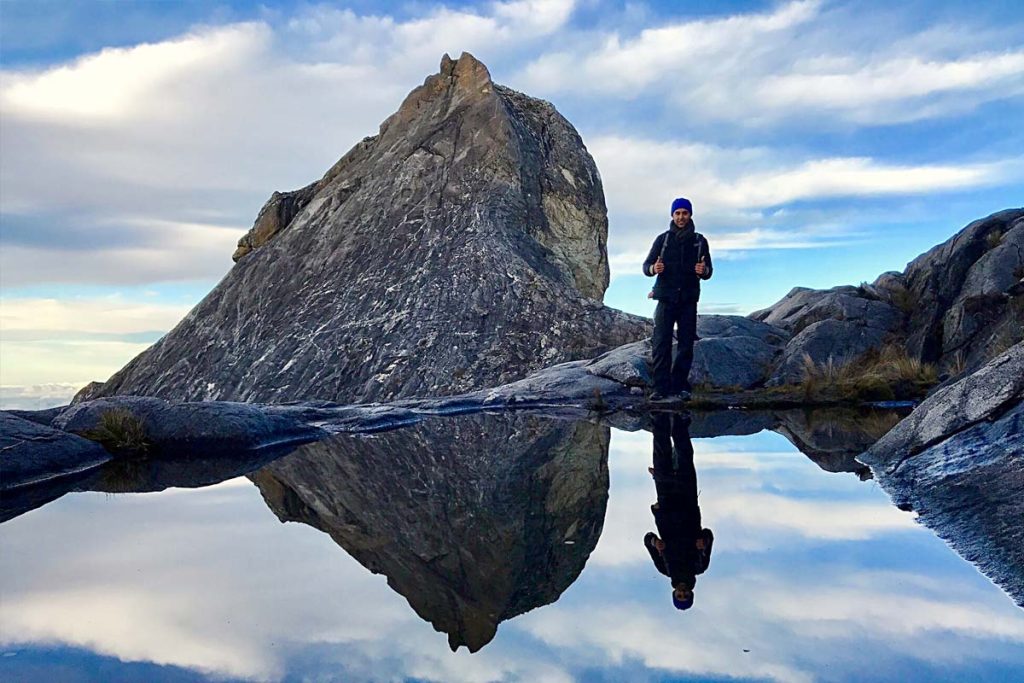
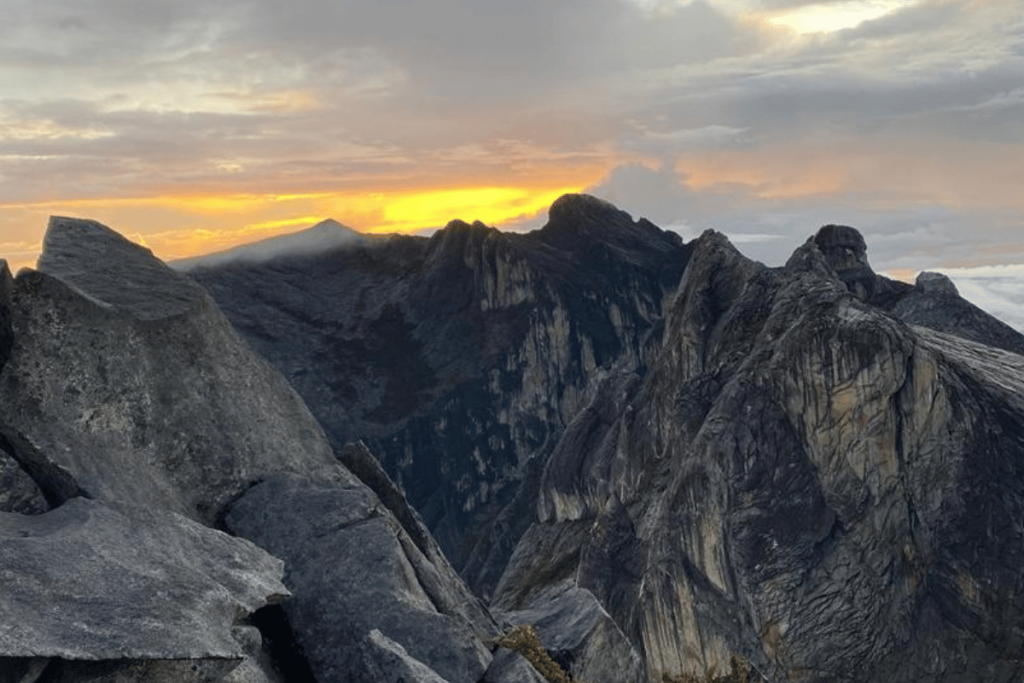
What makes Kinabalu summit photos stand out is the landscape: smooth granite, deep shadows and the jagged peaks around Low’s Peak, with climbers silhouetted against the sky. Including some of this in the foreground, rather than an empty sky, gives your photos a much stronger sense of place and scale.
The sea of clouds
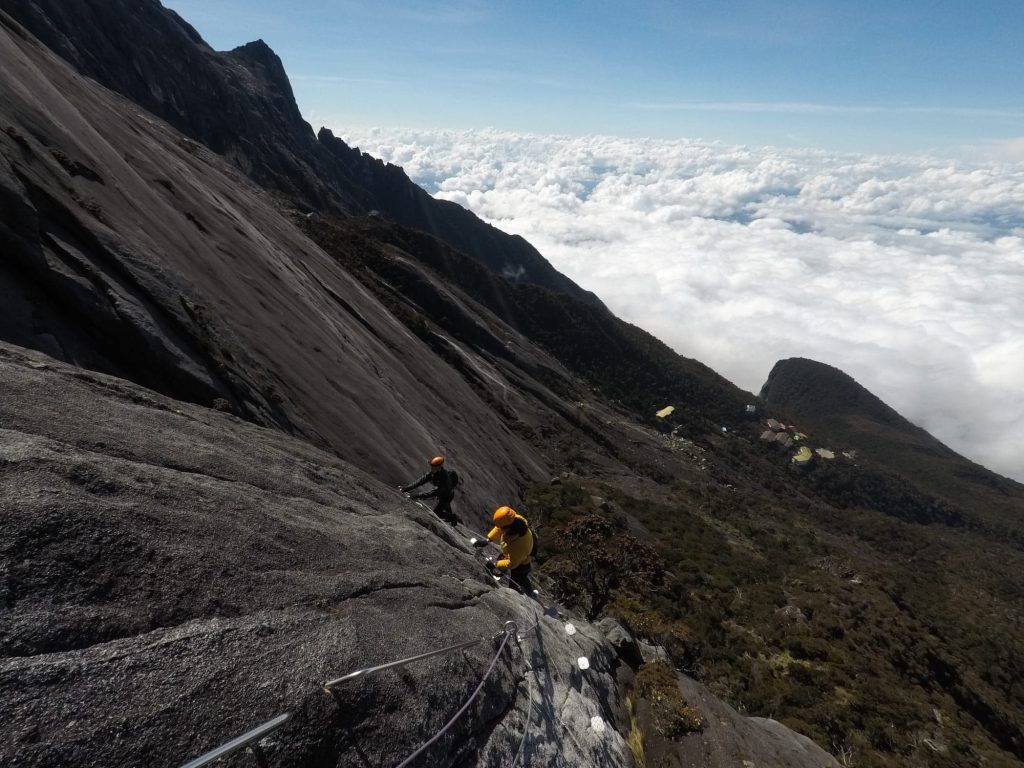
On clear mornings a blanket of cloud often stretches below the summit, with only distant peaks breaking through. Try wide shots to show the scale, as well as tighter frames on individual cloud formations catching the early light.
Photograph your fellow climbers
Some of the best Kinabalu photos are of people: silhouettes against the sunrise, tired but happy faces at the summit sign, or the line of headlamps winding up the mountain in the dark. These moments often tell the story of the climb as well as any landscape.
Remember to put the camera down
It is easy to spend the whole sunrise looking at a screen. Take your photos, but also give yourself a few minutes simply to watch — many climbers say those are the moments they remember most.
Mount Kinabalu sunrise photography checklist
- Spare batteries kept warm in an inside pocket
- Camera or phone you can reach without taking your gloves off for long
- A lens cloth for condensation, which is common in the cold, damp air
- A small dry bag or pouch in case of mist or drizzle
Keep in mind that your guide sets the pace and the time spent at the summit, and Sabah Parks may restrict access to the summit in bad weather — so be ready to shoot quickly when the moment comes.
Mount Kinabalu sunrise FAQs
What time is sunrise on Mount Kinabalu?
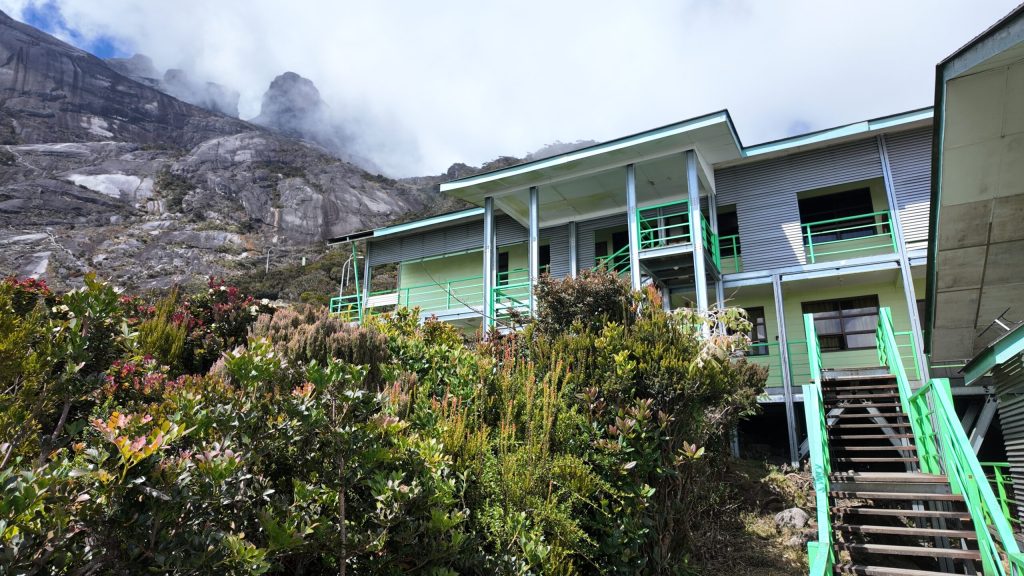
Sunrise in Sabah is usually around 6:00 am, with the sky brightening from about 5:30 am. Climbers leave Laban Rata at around 2:00 to 2:30 am to reach Low’s Peak in time for the Mount Kinabalu sunrise. Check exact times for your date at timeanddate.com.
What if it’s cloudy?
Summit weather changes quickly, but even on cloudy mornings the sea of clouds below the plateau often makes for striking photos. Our guide to the best time to climb Mount Kinabalu explains which months tend to be clearer.
Do I need a professional camera?
No. A modern phone captures the Mount Kinabalu sunrise well, especially in night or HDR mode. Keep spare batteries warm in an inside pocket, and book a 2D1N Mount Kinabalu climb when you’re ready to see it for yourself.
Final thoughts
The sunrise from Kinabalu’s summit photographs well at almost any skill level — the scenery does most of the work. Prepare for the cold, keep your camera handy and mix landscapes with human moments, and you will come home with photos that capture how it felt to stand on the roof of Borneo.